Casino Games

How Roulette Bets and Payouts Work for Beginners

Roulette payouts can appear generous, especially when a single-number wager offers 35 times the original stake as profit. However, the larger number tells only half

Read More

Casino Games

European Roulette vs American Roulette: Which Has Better Odds?

At first glance, European and American roulette feel almost identical. Both use a spinning wheel, red and black numbers, green zero pockets, and a table

Read More
Online Slots

Ancient Egypt Slots: How Iconic Games Built a Lasting Trend

Some slot themes appear briefly and disappear when trends change. Ancient Egypt is different. New games featuring pyramids, pharaohs, scarabs, and supernatural tombs continue to

Read More
Casino Games

How Roulette Bets and Payouts Work for Beginners

Roulette payouts can appear generous, especially when a single-number wager offers 35 times the original stake as profit. However, the larger number tells only half the story.

Every payout is connected to the amount of the wheel covered by the wager. A bet covering one pocket pays much more than one covering 18 pockets because it has far fewer ways to succeed.

Understanding Roulette Bets means looking at coverage, probability, and payout together. Once those three elements are clear, the table becomes easier to read and misleading assumptions become easier to avoid.

The game remains based on chance, so knowing the rules improves understanding rather than guaranteeing better results.

Straight-Up Bets Pay 35:1

A straight-up bet is placed directly on one number, including zero. If that exact pocket wins, the wager pays 35:1.

For example, a $2 winning wager produces $70 in profit. The original $2 is returned as well, making the total return $72.

This option offers the largest standard payout because it covers only one pocket. PokerStars and New Jersey’s roulette regulations both list the straight-up payout at 35:1.

Splits and Streets Cover Nearby Numbers

A split wager covers two adjacent numbers by placing a chip on the line between them. It pays 17:1.

A street covers three numbers in one horizontal row and pays 11:1. A $5 winning street wager therefore returns $55 in profit plus the original $5, for a total of $60.

These positions are determined by the table layout rather than the order of numbers around the physical wheel.

Corners and Six Lines Offer Wider Coverage

A corner bet covers four numbers that meet at one point on the grid. It pays 8:1.

A six-line wager covers two neighboring streets, giving the player six numbers and a 5:1 payout. If $10 is placed on a winning six line, the profit is $50 and the total return is $60.

These wagers sit between narrow inside bets and broad outside options. They cover more numbers than a straight-up but fewer than a dozen or color wager.

Dozens and Columns Pay 2:1

The numbered grid contains three dozens: 1-12, 13-24, and 25-36. A winning dozen pays 2:1.

The layout is also divided into three vertical columns containing 12 numbers each. A column bet has the same 2:1 payout.

A $10 winning wager returns $20 in profit plus the $10 stake. Neither dozens nor columns includes zero, so a zero result normally causes all three choices to lose.

Even-Money Options Pay 1:1

Red-black, odd-even, low-high, and high-low wagers each cover 18 numbers. They pay 1:1, meaning the profit equals the stake.

A $20 winning black bet produces $20 profit and returns the original $20. The player receives $40 altogether.

Despite the phrase “even money,” the chance of winning is not exactly 50%. The green zero is outside all six of these options, and American roulette adds a second green pocket.

How Zero Creates the House Advantage

European roulette has 37 pockets, but standard payouts are effectively based on a 36-number structure. A straight-up bet pays 35:1 even though its true odds on a 37-pocket wheel are 36:1 against.

That difference produces the standard European house edge of approximately 2.70%. American roulette adds 00, increasing the wheel to 38 pockets and the usual edge to around 5.26%.

Changing from a straight-up wager to red does not remove that built-in advantage.

Avoid Confusing Odds With Payouts

Odds describe the relationship between winning and losing outcomes. Payouts describe what the casino awards after a successful wager.

A 35:1 payout does not mean there is a one-in-35 chance of winning. On European roulette, one number has a one-in-37 probability; on American roulette, it is one in 38.

The same mistake occurs with even-money wagers. They pay 1:1, but the zero pocket prevents their winning probability from reaching a true 50%.

Why Betting Systems Do Not Change Payouts

Systems such as Martingale change the size of the next bet after a win or loss. They do not alter the wheel, covered numbers, or listed reward.

A sequence of losses may force the wager to grow quickly, while casino limits and finite budgets prevent unlimited doubling. FanDuel’s roulette guide notes that progression systems cannot change the underlying odds or eliminate the house advantage.

Betting patterns should therefore never be treated as guaranteed recovery methods.

Roulette payouts are based on how many numbers a wager covers. One number pays 35:1, two pay 17:1, three pay 11:1, four pay 8:1, and six pay 5:1. Dozens and columns pay 2:1, while broad even-money options pay 1:1.

Always distinguish profit from total return and payouts from actual probability. The green zero creates the casino’s mathematical advantage.

Review the payout table before playing and choose a single-zero wheel when available. Use fixed stakes, avoid loss-chasing systems, and play only with money set aside for entertainment.

Casino Games

European Roulette vs American Roulette: Which Has Better Odds?

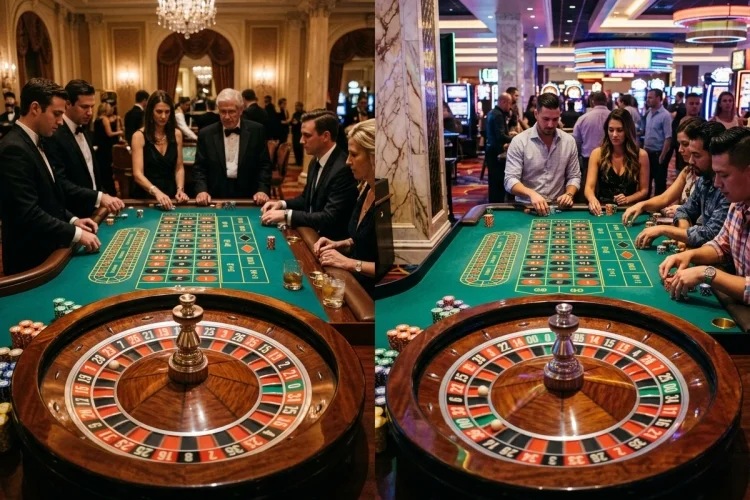
At first glance, European and American roulette feel almost identical. Both use a spinning wheel, red and black numbers, green zero pockets, and a table filled with different betting positions.

The key difference is easy to miss but impossible to ignore mathematically. In the European Roulette vs American Roulette comparison, the American version adds 00 without increasing the regular payouts.

That means players accept a lower chance of winning while receiving the same reward when they succeed. No version guarantees profit, but understanding the numbers can help players select the game with the smaller built-in disadvantage.

Comparing the Number of Pockets

A European wheel contains numbers 1 to 36 plus a single zero, creating 37 possible outcomes. An American wheel adds 00, increasing the total to 38.

The ball has one landing pocket per spin. Assuming a balanced wheel and fair game, each space has the same probability of being selected.

Official casino rules describe the double-zero wheel as having 38 equal compartments. The extra compartment is responsible for most of the mathematical difference between these versions.

Why Identical Payouts Matter

A winning straight-up bet pays 35:1 on either standard wheel. Split bets pay 17:1, streets pay 11:1, corners pay 8:1, and even-money bets pay 1:1.

These payouts would be favorable on a wheel containing only numbers 1 to 36. The green zero spaces create additional losing results without increasing the reward.

European roulette has one such pocket. American roulette has two, so the gap between the true probability and advertised payout becomes larger.

House Edge in Simple Terms

Standard European roulette has a house edge of about 2.70%. American roulette has an edge of approximately 5.26% on most common wagers.

Imagine that two players each place a total of $1,000 in wagers over many sessions. Based purely on the theoretical edge, the long-run expected loss is approximately $27 on the European game and $52.60 on the American version.

Actual short-term results can be very different. Someone may leave with a profit, lose the entire budget, or finish close to even. House edge describes long-term expectation rather than an individual outcome.

Red and Black Are Not Exactly 50-50

The layout contains 18 red numbers and 18 black numbers. This can make a color bet appear to be a perfect coin flip.

However, zero is green, and double zero is also green. A red wager therefore covers 18 of 37 outcomes in Europe and 18 of 38 outcomes in the American version.

That produces winning chances of about 48.65% and 47.37%, respectively. Both bets pay even money despite falling below a true 50% probability.

Single-Number Bets Show the Same Pattern

A bet on one number wins once in every 37 outcomes theoretically on a European wheel. Its probability is about 2.70%.

On an American table, the same wager covers one of 38 possible results, reducing the chance to around 2.63%. Both versions still pay 35:1.

Choosing more numbers changes how frequently a wager may win and how much it pays, but it does not remove the standard house edge.

Beware of the Five-Number American Bet

The American table includes a wager covering 0, 00, 1, 2, and 3. It pays 6:1 when one of those five spaces wins.

Standard double-zero rules place the house advantage for this bet at roughly 7.89%, compared with 5.26% for most other wagers on the layout.

This is an important reminder that not all roulette bets have the same edge. Players should inspect the rules and payout table rather than judging a wager by the number of spaces it covers.

Can Special Rules Improve European Odds?

Some European or French-style tables include La Partage. When zero appears on an eligible even-money wager, the player receives half of the stake back rather than losing everything.

Another rule, En Prison, may hold the bet for the following spin. If the next result qualifies, the original stake can be returned.

These rules can reduce the effective edge on qualifying bets, but they are not available at every table. Always open the game information panel before placing money.

Do Betting Systems Change the Comparison?

Systems such as Martingale, Fibonacci, and D’Alembert alter the wager size after wins or losses. They do not change the number of pockets, payout table, or probability of the next result.

A progression may produce many small wins followed by a large loss. Table limits and a limited bankroll also prevent endless increases.

The lower-edge wheel remains mathematically preferable regardless of the staking pattern. No sequence can guarantee that previous losses will be recovered.

European roulette offers better standard odds because it has one green zero instead of two. Its 2.70% house edge is substantially lower than the usual 5.26% advantage found on an American wheel.

The difference affects straight-up bets, outside wagers, and almost every other standard option because the payouts generally stay unchanged. European tables with favorable zero rules can offer an even smaller edge on eligible bets.

Check the number of pockets before playing and avoid assuming all roulette games are identical. Use small, fixed stakes, set a firm loss limit, and view every session as entertainment rather than dependable income.

Online Slots

Ancient Egypt Slots: How Iconic Games Built a Lasting Trend

Some slot themes appear briefly and disappear when trends change. Ancient Egypt is different. New games featuring pyramids, pharaohs, scarabs, and supernatural tombs continue to be released alongside titles that have existed for years.

A major reason Ancient Egypt Slots remain visible is that successful games have developed into recognizable series. Developers can bring back familiar explorers, magical books, gods, and locations while introducing different features.

This gives players something they already understand, but it also allows each new release to feel slightly different. The result is a theme that can support sequels, spin-offs, modern redesigns, and completely new stories.

Book of Dead Became a Recognizable Reference Point

Released in 2016, Rich Wilde and the Book of Dead follows the fictional explorer Rich Wilde into Ancient Egypt. Its central book symbol acts as both a wild and scatter, while the free-spins round includes an expanding symbol.

Play’n GO has continued using the title as the foundation for a wider collection of games. The combination of an explorer, magical book, temple setting, and familiar reel structure created a format that could be expanded into additional adventures.

Its importance does not mean every Egyptian slot copies the same game. However, it demonstrates how a clear character and setting can give a traditional slot a memorable identity.

Familiar Characters Encourage Sequels

Once players recognize a fictional explorer or artefact, developers do not need to introduce the entire concept again. They can take the same character into another tomb, kingdom, or supernatural conflict.

Play’n GO later expanded the fictional universe through titles involving Rich Wilde and his daughter, Cat Wilde. Cat Wilde and the Lost Chapter, for example, returns to Ancient Egypt and continues the search connected with the Book of Dead.

The company also released Book of Dead GO Collect in February 2026, sending Rich Wilde beneath the dunes in another treasure-vault story.

Mythology Makes the World Easy to Expand

Egyptian mythology contains gods, monsters, magical objects, underworld journeys, and stories about rebirth. This provides enough material for many games without requiring exactly the same plot.

A title might focus on Anubis and the underworld, while another highlights Horus, Cleopatra, Osiris, or a fictional pharaoh. Pragmatic Play’s Nile Fortune, for example, includes symbols connected with Horus and Bastet.

Because each figure has a different visual identity, developers can build separate features around them while keeping the broader Egyptian setting recognizable.

The Theme Can Be Classic or Experimental

Some Egyptian games use a simple five-reel layout with paylines, free spins, and expanding symbols. Others introduce grids, multipliers, collection mechanics, or variable reel structures.

Ancient Egypt Classic from Pragmatic Play presents the theme through a traditional format. By contrast, the provider’s Heart of Cleopatra uses a seven-by-seven grid where wins form through symbol clusters.

This variety helps prevent every release from feeling identical. Players who prefer straightforward games and those who enjoy more complex features can both find titles within the category.

Egyptian Imagery Works Well on Small Screens

Mobile slot interfaces need symbols that remain recognizable when displayed on a phone. Pharaoh masks, books, cobras, eyes, and scarabs have clear shapes that can remain distinct even when the reels are relatively small.

Bright gold objects also stand out against dark tombs, blue skies, or sandy backgrounds. This contrast helps players identify special symbols without studying every detail.

The benefit is mainly visual clarity. It does not affect the game’s payout rate, volatility, or probability of triggering a feature.

New Technology Keeps Refreshing the Theme

Developers can modernize Egyptian settings without abandoning the familiar imagery. Pragmatic Play’s Rise of Giza PowerNudge combines pyramids and scarabs with the company’s PowerNudge mechanic.

The same approach can be seen in Gears of Horus, which mixes Egyptian mythology with a mechanical visual concept.

These combinations allow an ancient setting to feel contemporary. Instead of simply recreating a tomb, developers can add machines, changing reels, animated maps, or interactive-style features.

Ancient Egypt Slots have become a lasting category because iconic games created recognizable characters, artefacts, and gameplay formats.

Successful titles can produce sequels, while Egyptian mythology provides enough material for many different stories.

The theme also adapts well to classic paylines, cluster systems, Megaways mechanics, and mobile interfaces. That flexibility allows developers to refresh it without removing the symbols players recognize.

When exploring these games, compare their mechanics instead of assuming that similar artwork means identical gameplay.

Read the rules, test demo versions where permitted, and keep all real-money play within a predetermined entertainment budget.

Online Slots

Popular Themes in Online Slot Games Players Keep Returning To

Browse almost any large slot library and you will notice the same kinds of worlds appearing in different forms.

Cowboys return for another duel, candies cover the reels, monsters escape from dark castles, and famous characters receive new adventures.

These ideas remain common because players can understand them quickly. A Western game suggests danger and treasure, while a candy-themed title promises something colorful and lighthearted.

The Popular Themes in Online Slot Games are constantly updated through new characters, graphics, soundtracks, and mechanics.

However, popularity can vary by country, casino, and audience. A theme that dominates one platform may be less visible somewhere else, so there is no universal ranking that applies to every player.

Wild West and Cowboy Slots

Western-themed games usually include sheriffs, outlaws, saloons, revolvers, desert towns, and dramatic high-noon confrontations. Their stories often revolve around capturing criminals or finding stolen gold.

NetEnt’s Dead or Alive recreates this style with a frontier setting and wanted-outlaw imagery. Its long-running Western concept has also expanded into later entries within the same fictional world.

The theme works because its symbols are instantly recognizable. It also supports suspenseful music and features based on shootouts, locked symbols, or wanted posters.

Candy, Food, and Colorful Sweets

Candy themes use bright colors, simple shapes, cakes, sweets, fruit, and playful backgrounds. They generally avoid complicated stories and focus on cheerful presentation.

These games often use cascading symbols or cluster-style layouts because groups of colorful objects are easy to recognize. NetEnt’s Reel Rush 2, for example, places cube-shaped fruit and star symbols in a colorful, video-game-inspired world.

The visual simplicity makes candy games approachable. However, the playful design should not be mistaken for low-risk gameplay, since volatility and payout structures vary by title.

Horror and Supernatural Stories

Horror slots use haunted houses, vampires, ghosts, zombies, demons, and mysterious creatures. Some are genuinely dark, while others mix spooky imagery with humor.

Rich Wilde and the Tome of Insanity combines adventure with creatures and horror inspired by cosmic-fiction ideas. Its fictional explorer must escape supernatural monsters while moving across a grid-based game.

Horror themes create suspense through shadows, sound effects, and sudden animation. They are especially effective around seasonal events such as Halloween, although many remain available throughout the year.

Detectives and Mystery Adventures

Mystery games invite players to solve crimes, discover clues, or uncover hidden objects. Their symbols may include magnifying glasses, letters, evidence, keys, and suspicious characters.

Riddle Reels: A Case of Riches uses Sherlock Holmes as its central inspiration. Play’n GO describes the title as a three-reel game combining the famous fictional detective with elements of traditional pub fruit machines and board-game-style play.

This combination shows how developers can mix several styles. A single slot may be a mystery story, a classic game, and a character-based experience at the same time.

Music and Rock-Based Slots

Music slots may be inspired by a genre, fictional performer, real band, or particular era. Their biggest attraction is usually the soundtrack.

Play’n GO’s Helloween game celebrates the German power metal band and incorporates visual and musical elements associated with its Keeper of the Seven Keys album.

Licensed music themes can create immediate recognition among existing fans. They also allow bonus sequences to feel like performances, concerts, or music videos rather than ordinary feature rounds.

Branded Characters and Familiar Worlds

Branded games use existing films, musicians, television programs, comics, or public figures under licensing agreements. Their main advantage is familiarity.

Players already know the characters and setting, so the game does not need to build its world from the beginning. However, a famous brand does not automatically make the gameplay suitable for everyone.

Before choosing a branded slot, check whether its mechanics are actually appealing. Sometimes the title or artwork receives more attention than the paytable, volatility, or feature frequency.

Why Familiar Themes Remain Common

Themes help players sort large game libraries. Someone who enjoys fantasy can search for dragons, while another person may prefer Westerns or classic fruit machines.

They also make features easier to communicate. A detective can reveal a clue, a cowboy can fire at a target, and a magician can transform the reels.

Yet presentation and mathematics are separate. Two games with nearly identical artwork may have very different rules, return-to-player settings, and volatility levels.

Popular Themes in Online Slot Games include Western adventures, candy worlds, horror stories, detectives, music, and familiar branded characters.

These styles remain visible because they communicate a mood quickly and give game features a recognizable context.

A memorable theme can improve entertainment, but it cannot improve your chances by itself. Always compare the actual rules instead of judging a game by its title.

Try the demo version where legally available, read the paytable, and confirm the betting range before playing for money. Keep sessions within a fixed entertainment budget and stop when the limit is reached.

Responsible Gambling

Gambling Budget Tips That Make Spending Easier to Control

A budget that exists only in your head can disappear quickly. A few small deposits, a nearly completed bonus, or an unexpected loss may persuade you that spending a little more is harmless.

A practical Gambling Budget should be written down, connected to your real financial situation, and supported by tools that make changing the plan less convenient.

The goal is not to predict how much you will win. It is to decide the maximum cost of the activity.

This approach makes gambling spending more visible and gives you a clear reason to stop, even when a session feels exciting.

Calculate Your Real Disposable Income

Start with monthly income after tax. Subtract rent or mortgage payments, utilities, food, transport, insurance, debt, savings, and other essential commitments.

The amount left is disposable income, but gambling should still receive only a small portion of it. Other hobbies, social activities, emergencies, and irregular costs also need room in the budget.

GamCare recommends identifying priority expenses and tracking outgoings before trying to control gambling-related spending.

Pick a Fixed Number, Not a Percentage During Play

A percentage can be useful when preparing a monthly plan, but use a clear currency amount once the budget is set. “I will spend no more than $25 this month” is easier to follow than “I will keep it reasonable.”

Avoid linking the allowance to recent wins. A winning session does not increase the amount you can safely afford to lose next time.

The number should remain unchanged until the chosen period ends. Review it only when calm and away from the casino platform.

Separate Monthly and Session Limits

A monthly ceiling controls the overall cost, while a session limit prevents one visit from using everything. Both can work together.

For example, a $40 monthly allowance could be divided into four $10 sessions. When one session ends, do not immediately use the money reserved for another week.

Regulators recognize several kinds of financial controls, including deposit, spend, and loss limits. These tools measure different activities, so players should read the operator’s definition before selecting one.

Use Account Tools Before the First Bet

Activate the lowest practical deposit or spending limit before transferring money. Lowering a limit should be simple, while increasing it should never be an emotional response to a loss.

In Great Britain, operators are required to make financial-limit facilities easily accessible. Since October 31, 2025, customers must also be prompted to consider a financial limit before making their first deposit.

From September 30, 2026, further UK rules are scheduled to standardize how gross deposit limits are offered and named.

Create Friction Around Extra Deposits

Convenience can make impulse spending easier. Remove saved payment details, disable one-click deposits where possible, and avoid keeping several payment methods connected to the account.

Bank gambling blocks can create an additional barrier. GamCare explains that many blocks can be activated through a banking app, telephone service, or branch, and some include a cooling-off period before they can be removed.

A block is not a budgeting trick for everyone. It is a stronger safeguard when sticking to personal limits has become difficult.

Include Time in the Plan

Fast games can produce many transactions in a short period. A spending allowance without a time limit may therefore be used faster than expected.

Choose a session length before playing and schedule breaks. Avoid gambling while tired, upset, or under the influence, because these conditions may make the plan harder to follow.

Both the Responsible Gambling Council and NCPG recommend setting time and financial boundaries before gambling begins.

Review the Final Cost Honestly

At the end of each session, record the starting deposit, additional payments, withdrawals, fees, and remaining balance. Do not count pending bonuses or unsettled bets as money returned.

At the end of the month, compare your actual spending with the original plan. Repeatedly exceeding the amount is a warning that the current system is not working.

Do not solve the problem by creating a larger allowance. Take a break, use stronger limits, and discuss the situation with a qualified support organization.

A Gambling Budget works best when it is specific, visible, and difficult to change impulsively. Calculate disposable income, select a fixed monthly amount, divide it into session limits, and combine money controls with a timer.

Use casino tools, banking alerts, and payment blocks where appropriate. Record the complete cost rather than remembering only wins or withdrawals.

Create your plan before opening a gambling app or website. When you repeatedly break the limit, stop depositing instead of increasing it. A temporary break or professional support may provide more protection than another budgeting attempt.

Responsible Gambling

Responsible Gambling Tips for Staying in Control

It is easy to create a gambling limit when nothing is happening. Following that limit becomes harder when a game is exciting, a bonus is nearly complete, or a previous loss feels recoverable.

That is why Responsible Gambling requires more than simply promising to “be careful.” Players need practical rules that still work when emotions are running high.

A useful plan covers what happens before, during, and after a gambling session. It determines how much money can be spent, how long play will continue, and what action to take when warning signs appear.

These habits do not make gambling profitable, but they can make risks easier to recognize and control.

Decide Your Budget Before Logging In

Start with an amount that can be lost without affecting daily life. This should be separate from money needed for housing, bills, food, transportation, debt, or savings.

Once the budget has been chosen, treat it as the complete cost of the activity. Do not automatically deposit more because the first amount disappeared faster than expected.

Casino account limits and banking alerts can make the plan more visible. Research published by the UK Gambling Commission found that financial limits were among the most recognized gambling-management tools, although many consumers had never used them.

Think of Gambling as Paid Entertainment

A movie ticket costs money even when the film is disappointing. Gambling should be viewed in a similar way: the budget pays for entertainment, not for a guaranteed financial return.

This approach makes it easier to leave without trying to recover every loss. It also prevents occasional wins from creating the false belief that gambling can replace work or regular income.

Random results do not remember previous outcomes. A long losing streak does not mean the next spin, hand, or bet is “due” to win.

The Responsible Gambling Council explains that gambling outcomes remain unpredictable despite a player’s perceived skill or confidence.

Avoid Chasing Losses

Chasing happens when a player increases spending or continues longer to win back money already lost. It often begins with a thought such as, “One more bet will fix the session.”

The problem is that the next wager carries the same risk as any other wager. Losing again can lead to a larger bet, creating a cycle in which the original spending limit is quickly forgotten.

The National Council on Problem Gambling lists repeatedly trying to win money back as a common warning sign. It also mentions gambling more frequently, feeling unable to stop, and continuing despite harmful consequences.

Use Breaks and Reality Checks

Fast online games can reduce awareness of time. Taking scheduled breaks interrupts continuous play and provides an opportunity to check both mood and spending.

Reality-check notifications can display how long a session has lasted. Time-outs temporarily prevent access for a selected period, while financial limits restrict deposits or spending.

These features should be activated before they feel necessary. Gambling Commission research describes reality checks, time-outs, limits, blocking software, and bank card blocks as tools available to help consumers manage play.

Pay Attention to Emotional Changes

A player’s mood can reveal more than the account balance. Gambling while angry, anxious, lonely, bored, or under the influence can weaken judgment.

Common signs of harm may include becoming secretive, experiencing mood changes, losing sleep, withdrawing from other people, and showing unexplained financial difficulties.

GamCare advises looking at behavioral, emotional, and financial changes rather than focusing only on the amount lost.

When gambling no longer feels enjoyable, continuing rarely improves the situation. Logging out is usually the better decision.

Review the Session Honestly

After playing, record the amount deposited, withdrawn, and lost. Avoid counting promotional balances or unsettled bets as real money.

A clear transaction history can show patterns that memory hides. Several small deposits may feel insignificant individually but become a large monthly total.

Ask whether you followed the original limits and whether gambling affected your mood afterward. When the answer repeatedly causes discomfort, it may be time for a longer break.

Know When to Self-Exclude

A time-out is useful for cooling down, but self-exclusion is designed for people who need a stronger barrier. It can prevent access to gambling accounts or venues for a defined period.

Self-exclusion works best when combined with gambling-blocking software, bank transaction blocks, reduced access to money, and support from someone trustworthy.

Support services can also explain treatment and recovery options.

The National Problem Gambling Helpline connects people in the United States with local resources, counseling information, and self-exclusion guidance. Other countries have their own national or regional services.

Responsible Gambling is easier when decisions are made before the excitement begins. Set an affordable budget, establish a time limit, avoid chasing losses, and review every session honestly.

Use account controls as prevention rather than waiting for a crisis. Reality checks, deposit limits, time-outs, bank blocks, and self-exclusion can provide useful barriers when motivation changes.

Before gambling again, write down your spending and time limits somewhere visible. When you cannot follow them, stop playing and contact a support organization in your country.

Asking for help early is a practical step, not something to feel embarrassed about.

Payments

Debit Cards at Online Casinos: A Practical Beginner’s Guide

Paying with a debit card feels familiar because it works much like an ordinary online purchase. Enter the card details, approve the transaction, and the deposit may appear in the casino balance shortly afterward.

However, using Debit Cards at Online Casinos involves more than completing a payment form. Your bank may decline gambling transactions, the casino may require identity checks, and a card accepted for deposits might not support withdrawals.

Processing rules also vary by operator, bank, card network, and country. Before depositing, it is worth understanding where the money comes from, what security checks may appear, and how withdrawals are handled.

A few minutes of research can prevent fees, delays, and payment problems later.

How Debit Card Deposits Work

A debit card is connected to money held in a bank or credit union account. Unlike a credit card, it normally allows you to spend funds you already have rather than borrowing from a lender.

At the casino cashier, you generally select the card option and enter your number, expiry date, security code, and deposit amount. The casino’s payment processor then sends an authorization request to the card issuer.

If approved, the amount is taken from the linked account. The transaction may appear on your statement under the casino’s name, its parent company, or a payment-processing description.

Why Players Choose Debit Cards

Convenience is the main attraction. Many people already own a Visa or Mastercard debit card, so they do not need to create an e-wallet or purchase a prepaid voucher.

Debit cards can also make spending easier to track because deposits appear in the user’s banking history. This may be helpful for anyone reviewing how much they spend on entertainment.

Still, easy access can become a disadvantage. Because the money comes directly from a checking account, repeated deposits can affect funds reserved for bills, food, or other essential expenses.

Why a Deposit May Be Declined

A declined payment does not automatically mean something is wrong with the casino. The account may have insufficient funds, the card details may be incorrect, or the bank may restrict gambling, international, or unusual online transactions.

An additional authentication screen may also appear. Visa Secure uses the EMV 3-D Secure protocol to help confirm that the person making an online card payment is the legitimate cardholder.

Do not repeatedly submit a declined transaction without checking the reason. Review the details, check your banking app, and contact the issuer through an official number when necessary.

Can You Withdraw to the Same Card?

Some casinos return withdrawals to the debit card used for the original deposit. Others may require a bank transfer or another approved payout method.

Withdrawal times are usually different from deposit times. Before releasing money, the operator may review the account, confirm payment ownership, and complete required identity or anti-fraud checks.

In Great Britain, licensed online gambling operators must verify a customer’s age and identity before allowing them to gamble. They should not delay requesting information until withdrawal when it could reasonably have been collected earlier.

Fees, Currency Conversion, and Overdrafts

The casino may advertise free debit card deposits, but that does not guarantee the entire transaction is free. Your bank may apply international transaction charges or currency-conversion costs.

An exchange-rate difference can also affect the final amount. This is especially relevant when the casino account uses a currency different from the bank account.

Overdraft settings deserve attention as well. The Consumer Financial Protection Bureau explains that a debit card purchase is generally declined when there is not enough money unless an account has relevant overdraft coverage or another linked arrangement.

How to Use a Debit Card More Safely

Confirm that the casino is legally authorized to serve your location. Check its licence through the regulator’s official register rather than trusting a logo in the website footer.

Use a strong account password, enable available authentication features, and activate transaction alerts through your banking app. Avoid entering card information through email links, unofficial apps, or messages from supposed casino representatives.

Monitor your statements regularly. If you notice an unfamiliar debit, contact the card issuer immediately using the number printed on the card or listed in the official banking app.

Set a Deposit Limit Before Playing

A debit card should not be treated as an unlimited source of casino funds. Decide on a fixed entertainment amount before logging in and keep essential money separate.

Some banks offer gambling blocks that stop qualifying payments made through an account or debit card. These controls can often be activated through online banking, a mobile app, a branch, or customer support.

A blocking tool is especially useful when taking a break or when controlling deposits has become difficult.

Debit Cards at Online Casinos offer a familiar and straightforward way to make deposits, but convenience should not replace careful checking.

Acceptance, fees, authentication, withdrawal support, and banking restrictions can differ significantly.

Before paying, verify the casino’s licence, review its cashier terms, confirm whether the card supports payouts, and understand any conversion or overdraft costs. Use only a card registered in your own name and never share authentication codes.

Most importantly, establish a firm spending limit before playing. Review your bank activity regularly and activate gambling controls whenever you need additional protection.

Payments

How to Choose Online Casino Payment Methods That Suit You

The payment method with the biggest logo or fastest deposit promise is not automatically the right choice. A good option should fit your location, budget, privacy preferences, and withdrawal needs.

That sounds simple, but casino payments involve several parties. The casino processes the request, the payment provider moves the money, and a bank or blockchain network may add another layer of approval.

This guide explains how to evaluate Online Casino Payment Methods before sending funds. Rather than naming one universal winner, it focuses on practical questions that can help players find a suitable, affordable, and manageable option.

Start With Legality and Availability

Before comparing speed or fees, confirm that online gambling is legal where you live and that the casino is licensed to accept players from your jurisdiction. A payment method being technically available does not mean the casino itself is authorised.

Payment availability can also differ by country. PayPal, Skrill, cards, prepaid services, and crypto platforms may restrict gambling transactions depending on local regulations and account conditions.

Always check the casino’s cashier page and the provider’s official terms instead of relying on an old review or forum comment.

Decide How Much Privacy You Need

Card and bank payments connect the casino transaction directly to a traditional financial account. E-wallets create an additional layer between the player and merchant.

PayPal functions as a digital wallet connected to eligible payment sources. Neteller states that merchants receiving wallet payments do not see sensitive details such as the customer’s card or bank account number.

Prepaid codes can offer another level of separation. PaysafeCard allows users to make online payments through prepaid codes without directly using a card or bank account during checkout.

Privacy does not mean anonymity. Licensed casinos may still need to verify the player’s identity.

Calculate the Total Cost

A payment advertised as free may still involve costs elsewhere. Possible charges include deposit fees, withdrawal fees, wallet-loading costs, bank-transfer charges, and foreign-exchange markups.

Currency conversion deserves particular attention. A casino account may use euros or dollars while the player’s card, wallet, or bank account uses another currency.

Compare the final amount received rather than only the displayed transaction fee. A poor exchange rate can cost more than a small fixed charge.

Check the Withdrawal Route First

Many players choose a deposit method without confirming whether it can receive payouts. This can lead to confusion when the withdrawal page shows fewer options than the deposit page.

Prepaid vouchers are a common example. They can be convenient for funding an account but may not function as a direct withdrawal destination.

Before depositing, check the casino’s eligible payout methods, minimum and maximum limits, verification requirements, and expected approval period. Using the same supported method for both directions can simplify record-keeping.

Compare Speed Realistically

Card and e-wallet deposits may be confirmed quickly, but withdrawals usually include an operator-processing stage. A casino may review identification, payment ownership, account activity, or bonus conditions before approving the payout.

PayPal notes that recipients generally receive wallet payments within minutes, but this describes movement within its payment system rather than a casino’s internal withdrawal review.

Bank transfers may take longer when different currencies, countries, or financial institutions are involved. Always separate “casino processing time” from “payment-provider transfer time.”

Understand the Risks of Crypto

Cryptocurrency may appeal to users who want cross-border transfers or do not want to use a conventional card. However, it requires careful handling.

Coinbase explains that on-chain transactions are irreversible. Funds sent to the wrong address or through the wrong blockchain network generally cannot be recovered, and network fees may apply.

Digital asset prices can also rise or fall between deposit and withdrawal. Crypto should therefore be treated as a higher-complexity payment option, not simply a faster version of cash.

Use Payment Methods as a Budgeting Tool

The best method should support financial control. A prepaid balance can create a natural spending ceiling, while a separate wallet can make casino-related transactions easier to track.

Some providers include additional safeguards. Skrill offers a gambling-block feature that prevents new wallet payments to gambling merchants once activated.

GambleAware also recommends practical financial steps such as setting spending limits and tracking expenses when gambling becomes a concern.

Watch for Payment Red Flags

Avoid any casino that asks you to send money to a personal account, communicate only through private messaging apps, or use a different beneficiary from the one shown in its official cashier.

Other warning signs include unclear fees, copied payment logos, pressure to deposit quickly, and requests to bypass standard verification. Legitimate processing should take place through the casino’s secure website.

Never share a card PIN, wallet password, one-time authentication code, or cryptocurrency recovery phrase.

Choosing between Online Casino Payment Methods involves more than finding the fastest deposit button. Players should compare legality, availability, privacy, total fees, withdrawal support, processing times, and personal budgeting needs.

Cards and wallets may offer convenience, bank transfers can suit larger transactions, prepaid options can support spending limits, and cryptocurrency provides flexibility with greater technical risk.

Review the full cashier terms before depositing and use only accounts registered in your own name. Keep gambling within a fixed entertainment budget, record every transaction, and seek support when spending becomes difficult to control.

Online Casinos

Online Casino Terms Made Simple: A Practical New Player Glossary

The first visit to an online casino can feel like browsing an app filled with secret codes. The lobby may sort games by provider, jackpot, volatility, or live dealer format.

Bonus pages mention playthrough, eligible games, contribution rates, and maximum cash-out.

Even the payment area has its own vocabulary. This guide explains the Online Casino Terms a beginner is most likely to encounter.

Instead of memorizing a huge dictionary, you will learn how the words connect to practical actions: choosing a game, adjusting a stake, accepting an offer, verifying an account, and requesting a withdrawal.

The aim is simple – understand the rules before real money is involved.

Lobby and Slot Vocabulary

The lobby is the main menu where games are grouped into categories such as slots, roulette, blackjack, baccarat, jackpots, and live casino. A game provider is the company that develops or supplies a title.

Demo mode uses virtual credits, while real-money mode uses funds from your account. A “featured” or “popular” label is mainly a promotional or navigation category; it does not automatically mean better odds.

Reels, Symbols, and Paytables

A reel is a spinning column, and a symbol is an image that lands on it. The paytable explains winning combinations, feature rules, and prize values. Paylines or winning ways determine how matching symbols are counted.

Wilds usually replace other symbols, while scatters may trigger bonus rounds. A respin repeats some reel activity. Cascading wins remove winning symbols and replace them, allowing another evaluation.

Table and Live Casino Language

In blackjack, “hit” means taking another card, while “stand” means keeping the current total. “Double down” increases the stake under defined conditions, and “split” separates a matching pair into two hands.

In roulette, inside bets cover individual numbers or small groups. Outside bets cover broader categories such as red, black, odd, or even. In live games, the betting window is the limited period when wagers can be placed.

Odds and Game Mathematics

RTP is the theoretical share of total stakes a game is designed to return over extensive play. It is not a personal refund rate.

House edge is the casino’s long-term mathematical advantage. Volatility describes the pattern of payouts. Hit frequency estimates how often a winning result appears, although a small “win” can still be lower than the amount staked.

Bonus and Promotion Vocabulary

A welcome bonus targets new customers. A match bonus is calculated as a percentage of a qualifying deposit, usually up to a stated limit.

Wagering or playthrough requirements define the qualifying turnover needed before bonus winnings become withdrawable. Other important conditions include eligible games, contribution rates, maximum stakes, expiry times, and cash-out caps. “Free” should never be understood as “without rules.”

Cashier and Verification Terms

The cashier is the section used for deposits and withdrawals. Minimum and maximum limits define the smallest and largest permitted transaction.

KYC is the identity-checking process used to confirm customer details. A pending withdrawal has been requested but not yet approved. A processed withdrawal has been released by the operator, although the payment provider may still need additional delivery time.

Safety and Player-Control Terms

A licensed operator holds authorization from a regulator for a specific market. An RNG, or random number generator, produces outcomes in digital games and should meet relevant testing standards.

A reality check is a session reminder. A time-out temporarily blocks access, while self-exclusion creates a stronger restriction. Deposit, loss, and spending limits help establish boundaries before emotions influence decisions.

Once you understand common Online Casino Terms, the lobby and cashier become much less mysterious.

You can identify how a game works, separate theoretical RTP from short-session results, and notice the conditions behind a tempting promotion.

Before registering, check whether online gambling is legal where you live and confirm the operator’s regulatory status. Read the paytable, bonus terms, payment limits, and verification requirements.

Use demo play where available, set strict financial boundaries, and never chase losses. Clear vocabulary supports clearer choices, but gambling outcomes always remain uncertain. No definition turns a random game into a reliable way to earn money.

Casino Safety

Casino Licensing Explained: The Trust Signal Players Need

Online casinos love trust symbols. Their homepages may display security badges, payment icons, software-provider logos, and impressive claims about fast withdrawals.

However, the most meaningful trust signal is usually less exciting: a verifiable gambling licence.

Casino Licensing connects an operator to a regulator, a legal framework, and ongoing compliance duties. It is not simply a certificate awarded once and forgotten.

A serious regulator may investigate complaints, examine business practices, apply restrictions, suspend operations, or revoke a licence. For players, that oversight offers a level of accountability that an unregulated website cannot provide.

A Licence Is an Ongoing Rulebook

Obtaining a licence normally requires an operator to disclose information about its ownership, finances, technology, and management. After approval, the business must continue following the regulator’s requirements.

The Nevada Gaming Commission, for example, has the authority to approve, restrict, condition, suspend, deny, or revoke gaming licences. The UK Gambling Commission also regulates operators through formal licences and licensing objectives.

This ongoing oversight is what makes a licence meaningful. Operators can face consequences when they fail to meet the expected standards.

Not Every Licence Offers the Same Protection

The word “licensed” is useful only when players know who issued the authorisation and what market it covers. Different regulators have different rules, enforcement powers, complaint systems, and consumer protections.

Players should therefore evaluate the issuing authority rather than simply trusting a badge. A credible regulator will usually maintain a public register, identify approved operators, publish guidance, and explain its enforcement powers.

The Malta Gaming Authority and UK Gambling Commission both provide searchable databases that allow users to check licence information.

Technical Standards Protect Game Integrity

Online slots, digital roulette, and virtual table games depend on software. Regulators may require these systems to meet technical standards before they can be offered to players.

Approved laboratories can examine random-number generators, game calculations, platform security, and other technical elements. eCOGRA states that it tests and certifies remote gambling products according to applicable jurisdictional requirements.

Independent testing does not make a casino game profitable. The house edge still applies, but certification can help confirm that the game performs according to its approved design.

Licensing Improves Payment Accountability

Withdrawal disputes are a major concern for online players. A licence cannot guarantee instant payments, but it usually requires an operator to publish its conditions and maintain procedures for reviewing customer complaints.

Some regulators also establish requirements for protecting player balances. The MGA explains that customer funds must remain separately identifiable under its player-protection framework.

Players should still review processing times, verification requirements, fees, and withdrawal limits before depositing. Licensing provides oversight, but it does not replace careful reading.

Promotions Must Follow Clearer Standards

A large welcome bonus may include wagering requirements, maximum-bet rules, restricted games, and withdrawal limits. On an unregulated site, important conditions may be difficult to find or understand.

Licensed operators are generally expected to communicate promotions fairly under the rules of their jurisdiction. Regulators can take action when advertising or terms fail to meet applicable requirements.

A licence does not automatically make a complicated bonus worthwhile. It simply creates standards against which the offer can be judged.

Responsible Play Is Part of Compliance

Licensing also supports measures designed to reduce gambling-related harm. Common features include self-exclusion, deposit limits, time-outs, account closures, and links to support organisations.

The MGA describes player protection as a shared responsibility between the operator, player, and authority. The World Health Organization also notes that gambling can cause financial, social, and health-related harm.

These tools are most effective when players use them early, rather than waiting until gambling becomes difficult to control.

Verify Before You Deposit

Begin by checking the casino footer, but complete the process on the regulator’s official website. Match the legal company name, licence number, status, approved domain, and permitted services.

Be cautious when a site shows only an image of a regulator’s logo or links to an unofficial verification page. The MGA has warned about websites impersonating licensed operators, making domain verification especially important.

Casino Licensing is one of the clearest ways to separate regulated operators from websites offering little accountability.

It supports technical standards, payment procedures, responsible-gambling measures, transparent terms, and formal complaint channels.

Still, every licence should be independently verified. Check the official register, confirm that the domain is approved, and review the casino’s withdrawal policy before depositing.

Remember that regulated gambling is still gambling. Losses are possible, and no licence can remove the house edge.

Treat licensing as a minimum safety requirement – not as an invitation to gamble more or spend beyond your limits.

View More