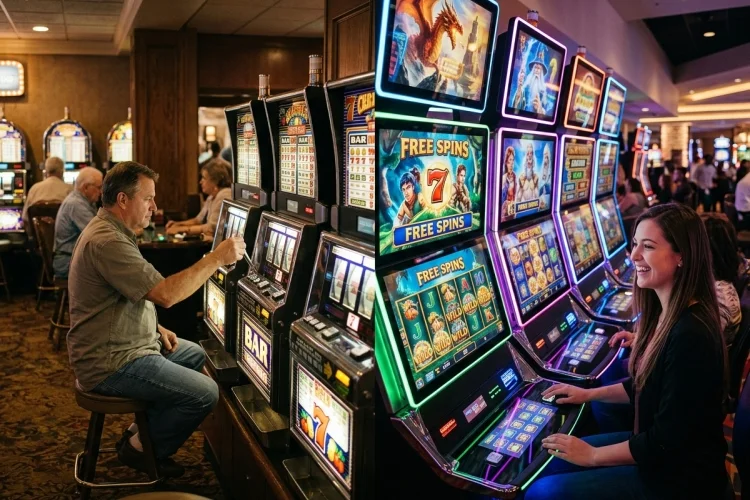
Online Slots

Online Slots

How to Choose Online Slots Using RTP for Smarter Game Selection

Scrolling through hundreds of online slots can make game selection feel like guesswork. Themes and bonus animations grab attention first, while the mathematical details are often hidden several clicks deeper inside the information screen.

A better way to Choose Online Slots Using RTP is to treat every game as a combination of long-term return, payout distribution, and winning frequency. RTP gives you a starting point, but volatility and hit frequency explain why games with similar percentages can behave very differently. Once you combine those numbers with stake size and feature structure, slot selection becomes much more logical.

Use RTP as Your First Filter, Not Your Final Decision

RTP is one of the easiest slot statistics to compare.

The UK Gambling Commission defines actual RTP through the relationship between total wins and total turnover, while theoretical or designed RTP represents how the game is mathematically intended to perform over sufficient play.

Compare Long-Term Mathematical Cost

Suppose one slot publishes 97% RTP and another publishes 94%.

All else being equal, the 97% game has a lower theoretical house margin. Over very large wagering volume, that difference becomes mathematically meaningful.

However, the phrase “over very large wagering volume” matters.

A player can still lose quickly on the 97% game or win substantially on the 94% game during a short session because theoretical return does not determine individual outcomes. UKGC monitoring guidance specifically accounts for the fact that actual RTP can deviate from designed RTP over limited samples.

So RTP should narrow your shortlist rather than make the entire choice.

Next, Identify the Volatility Profile

Once you have found games with acceptable RTP, compare their volatility.

Volatility describes the scale and distribution of potential fluctuations. The UK Gambling Commission characterises highly volatile games as those that may feature very large but rare prizes, while lower-volatility games tend to operate with a different distribution of awards.

Think About How You Want the RTP Delivered

Imagine two theoretical 96% slots.

The first frequently pays small and medium wins. The second produces fewer meaningful payouts but reserves more of its potential for rare bonuses worth hundreds or thousands of times the stake.

Their RTP may match, but their gameplay will not feel remotely similar.

For players who prefer steadier bankroll movement, lower volatility may be easier to tolerate. Those comfortable with longer dry periods might prefer high-volatility games with larger upside.

Neither profile changes the fact that random outcomes remain uncertain.

Use Hit Frequency to Fill the Information Gap

Hit frequency answers another important question: how often does the game record a win?

That information can help distinguish two slots that share similar RTP and volatility labels.

Not Every Hit Is a Profitable Spin

A hit does not necessarily mean the payout exceeds the amount wagered.

For example, a $1 spin might produce a $0.40 payout. It is technically a winning combination under some definitions, yet your balance has still declined by $0.60.

Public gambling-education material highlights this issue: games with relatively high hit frequencies can include many outcomes that merely return the stake or produce modest payouts.

That is why evaluating hit frequency without considering prize size can be misleeding.

A high number may make a slot feel active while saying very little about its long-term profitability.

Compare Three Slot Profiles Side by Side

The interaction becomes clearer with a hypothetical example.

Assume three games all have RTP around 96%.

Slot A: High Hit Frequency, Low Volatility

Slot A might generate frequent small wins. It may suit players who value longer sessions and less dramatic balance movement, although the house edge still applies over time.

Slot B: Medium Volatility

Slot B could distribute value between regular base-game wins and occasional bonus rounds.

This type of structure may feel balanced because neither the dry periods nor the maximum rewards dominate the entire experience.

Slot C: High Volatility

Slot C may rely heavily on rare free spins, multipliers, or large prizes. The bankroll can fall sharply before one significant event arrives—or that event may never arrive during the session.

These hypothetical structures are consistent with the broader distinction regulators make between low- and high-volatility prize distributions.

The right choice therefore depends on what type of variance you are prepared to absorb.

Adjust Stake Size to Volatility

Your game selection and bet size should not be treated as separate decisions.

A very volatile slot becomes far more aggressive when each spin consumes a large percentage of your bankroll.

Calculate How Many Base Spins Your Bankroll Supports

Suppose you have $100 available.

At $2 per spin, that bankroll contains only 50 full starting wagers. At $0.50, it contains 200.

Returns along the way will change the real number of spins, but this simple calculation gives you a useful starting measure of bankrol exposure.

If a game is known for rare large prizes, giving the bankroll more betting units generally creates more room for normal fluctuations.

It does not improve the underlying odds. It simply reduces how quickly a poor run can exhaust your session balance.

Investigate Bonus Structure and Maximum Win

RTP alone cannot tell you exactly how a slot distributes its payouts.

Modern games may use free-spin rounds, tumbling reels, multipliers, jackpots, or feature buys to concentrate significant portions of their prize potential.

Pragmatic Play product pages, for example, disclose combinations of RTP, volatility, game mechanics, and maximum-win information for individual titles.

Maximum Win Is Not the Same as Expected Return

A headline such as “maximum win 5,000x” tells you the upper payout potential.

It does not tell you how likely that maximum is.

A slot can advertise an enormous top prize while assigning an extremely small probability to reaching it. Similarly, a more modest maximum-win game might distribute payouts more evenly.

Keep maximum win seperated from RTP and hit frequency in your analysis.

Each metric answers a different question.

Verify RTP Inside the Actual Game

One easily overlooked issue is that the same game can sometimes be offered with different mathematical configurations.

Therefore, relying only on a third-party review can create inaccurate comparisons.

UK Gambling Commission guidance for gaming machines requires individual games to state their own RTP rather than using a single general figure where multiple games exist.

Check the Help or Information Menu

When possible, open the game’s information panel before playing.

Look for RTP, volatility rating, paylines or ways to win, feature rules, maximum bet, and bonus conditions.

If the casino version lists a different RTP from the review you previously read, use the number shown for the version actually being offered.

This small verification step makes your game-selection process much more accurrate.

Ignore “Hot” and “Cold” Slot Myths

Statistics can help describe a slot, but they do not predict the next individual result.

Wizard of Odds explains that properly random slot outcomes are independent of previous spins. A machine does not become more likely to pay because it has been quiet recently, nor is it necessarily “finished paying” after a large win.

Do Not Replace Mathematics With Recent History

Suppose a slot has produced no bonus for 150 spins.

That does not prove the feature is due on spin 151.

Likewise, watching another player hit a jackpot does not automatically reduce your probability on the next spin.

RTP, volatility, and hit frequency describe the overall mathematical architecture. They should not be turned into a prediction engine.

Good slot selection is about understanding the kind of risk you are choosing—not forecasting the next symbol combination.

Create a Practical Selection Checklist

When comparing two or three games, start with the exact RTP.

Then compare volatility and hit frequency, if the latter is publicly available. Look at the minimum stake, maximum win, major bonus mechanics, and whether the game’s return appears heavily concentrated in rare features.

Finally, ask whether your planned bet creates enough units for the volatility level.

A 96.5% high-volatility game might theoretically have a better return than a 96% low-volatility title, but the second may still match your preferred session style more closely.

There is no single statistic that identifies the “best” slot for every player.

To Choose Online Slots Using RTP intelligently, use RTP as the first filter rather than the entire strategy. Add volatility to understand payout swings, hit frequency to estimate how often wins occur, and feature structure to see where larger payouts may be concentrated.

Verify the exact game version and choose a stake that fits its risk profile. The clearer you understand the mathematics, the easier comparison becomes.

Online Slots

Ancient Egypt Slots: How Iconic Games Built a Lasting Trend

Some slot themes appear briefly and disappear when trends change. Ancient Egypt is different. New games featuring pyramids, pharaohs, scarabs, and supernatural tombs continue to be released alongside titles that have existed for years.

A major reason Ancient Egypt Slots remain visible is that successful games have developed into recognizable series. Developers can bring back familiar explorers, magical books, gods, and locations while introducing different features.

This gives players something they already understand, but it also allows each new release to feel slightly different. The result is a theme that can support sequels, spin-offs, modern redesigns, and completely new stories.

Book of Dead Became a Recognizable Reference Point

Released in 2016, Rich Wilde and the Book of Dead follows the fictional explorer Rich Wilde into Ancient Egypt. Its central book symbol acts as both a wild and scatter, while the free-spins round includes an expanding symbol.

Play’n GO has continued using the title as the foundation for a wider collection of games. The combination of an explorer, magical book, temple setting, and familiar reel structure created a format that could be expanded into additional adventures.

Its importance does not mean every Egyptian slot copies the same game. However, it demonstrates how a clear character and setting can give a traditional slot a memorable identity.

Familiar Characters Encourage Sequels

Once players recognize a fictional explorer or artefact, developers do not need to introduce the entire concept again. They can take the same character into another tomb, kingdom, or supernatural conflict.

Play’n GO later expanded the fictional universe through titles involving Rich Wilde and his daughter, Cat Wilde. Cat Wilde and the Lost Chapter, for example, returns to Ancient Egypt and continues the search connected with the Book of Dead.

The company also released Book of Dead GO Collect in February 2026, sending Rich Wilde beneath the dunes in another treasure-vault story.

Mythology Makes the World Easy to Expand

Egyptian mythology contains gods, monsters, magical objects, underworld journeys, and stories about rebirth. This provides enough material for many games without requiring exactly the same plot.

A title might focus on Anubis and the underworld, while another highlights Horus, Cleopatra, Osiris, or a fictional pharaoh. Pragmatic Play’s Nile Fortune, for example, includes symbols connected with Horus and Bastet.

Because each figure has a different visual identity, developers can build separate features around them while keeping the broader Egyptian setting recognizable.

The Theme Can Be Classic or Experimental

Some Egyptian games use a simple five-reel layout with paylines, free spins, and expanding symbols. Others introduce grids, multipliers, collection mechanics, or variable reel structures.

Ancient Egypt Classic from Pragmatic Play presents the theme through a traditional format. By contrast, the provider’s Heart of Cleopatra uses a seven-by-seven grid where wins form through symbol clusters.

This variety helps prevent every release from feeling identical. Players who prefer straightforward games and those who enjoy more complex features can both find titles within the category.

Egyptian Imagery Works Well on Small Screens

Mobile slot interfaces need symbols that remain recognizable when displayed on a phone. Pharaoh masks, books, cobras, eyes, and scarabs have clear shapes that can remain distinct even when the reels are relatively small.

Bright gold objects also stand out against dark tombs, blue skies, or sandy backgrounds. This contrast helps players identify special symbols without studying every detail.

The benefit is mainly visual clarity. It does not affect the game’s payout rate, volatility, or probability of triggering a feature.

New Technology Keeps Refreshing the Theme

Developers can modernize Egyptian settings without abandoning the familiar imagery. Pragmatic Play’s Rise of Giza PowerNudge combines pyramids and scarabs with the company’s PowerNudge mechanic.

The same approach can be seen in Gears of Horus, which mixes Egyptian mythology with a mechanical visual concept.

These combinations allow an ancient setting to feel contemporary. Instead of simply recreating a tomb, developers can add machines, changing reels, animated maps, or interactive-style features.

Ancient Egypt Slots have become a lasting category because iconic games created recognizable characters, artefacts, and gameplay formats.

Successful titles can produce sequels, while Egyptian mythology provides enough material for many different stories.

The theme also adapts well to classic paylines, cluster systems, Megaways mechanics, and mobile interfaces. That flexibility allows developers to refresh it without removing the symbols players recognize.

When exploring these games, compare their mechanics instead of assuming that similar artwork means identical gameplay.

Read the rules, test demo versions where permitted, and keep all real-money play within a predetermined entertainment budget.

Online Slots

Popular Themes in Online Slot Games Players Keep Returning To

Browse almost any large slot library and you will notice the same kinds of worlds appearing in different forms.

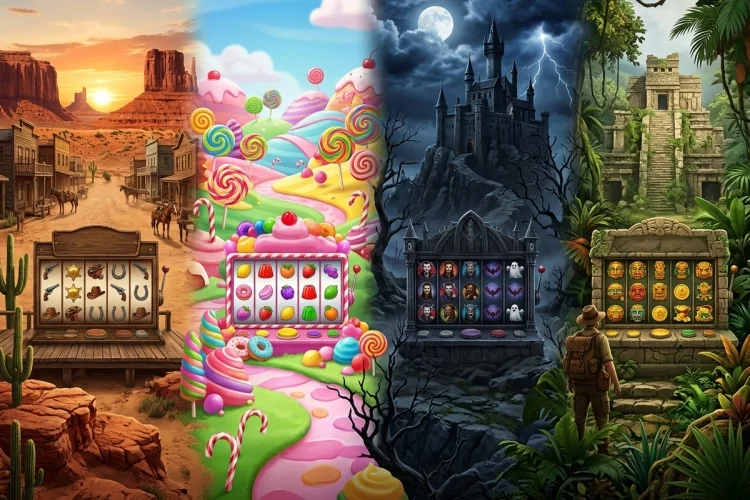
Cowboys return for another duel, candies cover the reels, monsters escape from dark castles, and famous characters receive new adventures.

These ideas remain common because players can understand them quickly. A Western game suggests danger and treasure, while a candy-themed title promises something colorful and lighthearted.

The Popular Themes in Online Slot Games are constantly updated through new characters, graphics, soundtracks, and mechanics.

However, popularity can vary by country, casino, and audience. A theme that dominates one platform may be less visible somewhere else, so there is no universal ranking that applies to every player.

Wild West and Cowboy Slots

Western-themed games usually include sheriffs, outlaws, saloons, revolvers, desert towns, and dramatic high-noon confrontations. Their stories often revolve around capturing criminals or finding stolen gold.

NetEnt’s Dead or Alive recreates this style with a frontier setting and wanted-outlaw imagery. Its long-running Western concept has also expanded into later entries within the same fictional world.

The theme works because its symbols are instantly recognizable. It also supports suspenseful music and features based on shootouts, locked symbols, or wanted posters.

Candy, Food, and Colorful Sweets

Candy themes use bright colors, simple shapes, cakes, sweets, fruit, and playful backgrounds. They generally avoid complicated stories and focus on cheerful presentation.

These games often use cascading symbols or cluster-style layouts because groups of colorful objects are easy to recognize. NetEnt’s Reel Rush 2, for example, places cube-shaped fruit and star symbols in a colorful, video-game-inspired world.

The visual simplicity makes candy games approachable. However, the playful design should not be mistaken for low-risk gameplay, since volatility and payout structures vary by title.

Horror and Supernatural Stories

Horror slots use haunted houses, vampires, ghosts, zombies, demons, and mysterious creatures. Some are genuinely dark, while others mix spooky imagery with humor.

Rich Wilde and the Tome of Insanity combines adventure with creatures and horror inspired by cosmic-fiction ideas. Its fictional explorer must escape supernatural monsters while moving across a grid-based game.

Horror themes create suspense through shadows, sound effects, and sudden animation. They are especially effective around seasonal events such as Halloween, although many remain available throughout the year.

Detectives and Mystery Adventures

Mystery games invite players to solve crimes, discover clues, or uncover hidden objects. Their symbols may include magnifying glasses, letters, evidence, keys, and suspicious characters.

Riddle Reels: A Case of Riches uses Sherlock Holmes as its central inspiration. Play’n GO describes the title as a three-reel game combining the famous fictional detective with elements of traditional pub fruit machines and board-game-style play.

This combination shows how developers can mix several styles. A single slot may be a mystery story, a classic game, and a character-based experience at the same time.

Music and Rock-Based Slots

Music slots may be inspired by a genre, fictional performer, real band, or particular era. Their biggest attraction is usually the soundtrack.

Play’n GO’s Helloween game celebrates the German power metal band and incorporates visual and musical elements associated with its Keeper of the Seven Keys album.

Licensed music themes can create immediate recognition among existing fans. They also allow bonus sequences to feel like performances, concerts, or music videos rather than ordinary feature rounds.

Branded Characters and Familiar Worlds

Branded games use existing films, musicians, television programs, comics, or public figures under licensing agreements. Their main advantage is familiarity.

Players already know the characters and setting, so the game does not need to build its world from the beginning. However, a famous brand does not automatically make the gameplay suitable for everyone.

Before choosing a branded slot, check whether its mechanics are actually appealing. Sometimes the title or artwork receives more attention than the paytable, volatility, or feature frequency.

Why Familiar Themes Remain Common

Themes help players sort large game libraries. Someone who enjoys fantasy can search for dragons, while another person may prefer Westerns or classic fruit machines.

They also make features easier to communicate. A detective can reveal a clue, a cowboy can fire at a target, and a magician can transform the reels.

Yet presentation and mathematics are separate. Two games with nearly identical artwork may have very different rules, return-to-player settings, and volatility levels.

Popular Themes in Online Slot Games include Western adventures, candy worlds, horror stories, detectives, music, and familiar branded characters.

These styles remain visible because they communicate a mood quickly and give game features a recognizable context.

A memorable theme can improve entertainment, but it cannot improve your chances by itself. Always compare the actual rules instead of judging a game by its title.

Try the demo version where legally available, read the paytable, and confirm the betting range before playing for money. Keep sessions within a fixed entertainment budget and stop when the limit is reached.

Online Slots

High RTP Slots: Smart Ways to Read the Numbers

Online searches for slots often include phrases such as “highest payout today,” “live RTP,” or “games that are ready to pay.” These claims sound useful, especially when they display constantly changing percentages.

Unfortunately, they can also create the false impression that players can identify exactly when a random game will produce a win. Real High RTP Slots work differently.

Their percentage describes a long-term mathematical return built into the game, not a short-term signal showing whether the reels are currently hot or cold.

To use RTP responsibly, players should know where to verify the number, how actual results differ from theoretical figures, and why wagering speed can matter more than small percentage differences.

Check the Game’s Official Information

The paytable or help menu should be your first source. It normally explains the game rules, symbol values, bonus triggers, winning patterns, and theoretical RTP.

Do not assume that a percentage listed in a blog post applies automatically to the game in front of you. Check the information connected to the exact title and version you are playing.

Gambling Commission guidance states that player-facing rules should provide information such as RTP, house edge, or the probability of winning events.

Theoretical RTP Versus Actual RTP

Theoretical RTP is the percentage created by the game’s mathematical design. Actual RTP is calculated from the prizes and turnover recorded during real play.

For example, a game designed with 91.68% RTP could temporarily record an actual return of 90.42% over a particular period. This difference does not automatically mean the theoretical figure is false; random variation can move measured results above or below the target.

An individual session is a much smaller sample, so its results can vary even more dramatically.

Be Careful With “Live RTP” Claims

A third-party page may publish a changing percentage and describe it as a live indicator. Unless the number comes from verifiable operator data and is clearly explained, it should not be treated as a prediction.

Even a legitimate actual-RTP figure only summarizes previous wagering and prizes. It does not reveal what the RNG will produce next.

A game that has paid below its theoretical rate is not required to compensate the next player. Similarly, a title that recently produced a large jackpot does not become incapable of producing another one.

Look Beyond a One-Point Difference

The gap between 96% and 97% RTP matters mathematically, but the practical value depends on how much you wager.

At $100 of cumulative turnover, the theoretical difference is only $1. At $10,000 of turnover, it becomes $100.

This does not mean players should continue wagering long enough to reach the expected percentage. More play creates more exposure to the house edge.

A slightly better RTP cannot protect a budget when stakes are too high, spins are too fast, or a player continues after reaching the original limit.

Verify the Operator as Well as the Game

A published RTP means little if the operator is not legally authorized or the software has not been properly evaluated.

Check the gambling regulator responsible for your location. The UK Gambling Commission, for example, maintains searchable records of licensed businesses, approved domains, and regulatory actions.

Independent laboratories also test game mathematics and RNG systems. RTP testing may use large sample simulations to check whether pay combinations converge toward their expected probabilities.

Do Not Confuse Better Odds With Guaranteed Profit

A slot with a smaller house edge is still designed so that the operator has a long-term mathematical advantage.

For example, a 98% RTP represents a theoretical house edge of 2%. That is more favorable than a 94% game with a 6% edge, but neither game guarantees that a particular player will finish ahead.

Randomness creates both winning and losing sessions. The higher figure improves the long-term expectation only in relative terms.

Slots should therefore be treated as paid entertainment, not as investments or income opportunities.

Build a Simple Playing Plan

Start by choosing a fixed entertainment budget. Divide it by the number of spins you expect to play so you can estimate a suitable stake.

For example, a $20 budget spread across roughly 100 rounds suggests an average wager of $0.20. Choosing $1 spins would expose the full budget in only 20 rounds before accounting for any payouts.

Set a time limit as well. GamCare recommends combining spending limits with time limits and taking regular breaks to review how much has been spent and how the activity feels.

High RTP Slots can be useful when comparing the theoretical cost of different games, but the percentage must be read in context.

Verify it through the official paytable, distinguish designed RTP from past actual performance, and ignore claims suggesting that a random slot is currently due to pay.

A higher percentage reduces the theoretical house edge, but it does not guarantee frequent wins or a profitable session. Compare volatility, feature rules, minimum stakes, and total wagering speed before playing.

Set clear limits, never chase money already lost, and use timeouts or self-exclusion tools when ordinary controls are no longer enough.

Online Slots

Classic Slots vs Video Slots: Key Differences for Beginners

Walk into a casino game library and you will usually see two familiar categories: simple fruit machines and colorful games filled with animated characters.

Although both involve spinning reels and matching symbols, the experience they provide can feel completely different. The main difference between Classic Slots and Video Slots is not simply how they look.

Their reel layouts, winning systems, bonus features, themes, and overall pace can also vary. One style focuses on straightforward spinning, while the other often adds free spins, wild modifiers, mini-games, and story-driven visuals.

This guide breaks down those differences in easy language. Understanding the formats will not predict winning spins, but it can help you choose a game that matches your preferred level of complexity and entertainment.

What Are Classic Slots?

Classic slot games are inspired by early mechanical machines. They commonly use three reels, one to five paylines, and familiar symbols such as cherries, bells, bars, horseshoes, and lucky sevens.

Their biggest attraction is simplicity. You select a stake, spin the reels, and check whether matching icons appear on a valid payline. There are usually fewer menus and special rules to learn.

Modern versions may still include wilds, free spins, or multipliers. However, these features tend to be less complicated than those found in feature-heavy video games.

What Are Video Slots?

Video slots display their reels digitally and commonly use five or more reels. They may feature numerous paylines, ways-to-win systems, cluster payouts, expanding grids, or cascading symbols.

These games are usually built around detailed themes. Players might explore ancient temples, fantasy kingdoms, space adventures, television shows, or fictional treasure hunts.

Animation and sound are also more prominent. Rather than simply showing reels spinning, a video game may include character movements, cinematic introductions, changing backgrounds, and animated bonus sequences.

Reels and Paylines Work Differently

Traditional three-reel slots often have one central payline or a small number of simple patterns. This makes it relatively easy to see why a combination has or has not paid.

Modern video games may contain 20, 40, or more fixed paylines. Others replace traditional lines with hundreds or thousands of possible symbol combinations.

More Lines Do Not Guarantee Profit

A larger number of winning patterns can create more ways to form combinations, but it does not guarantee that a session will be profitable. The wager structure and prize values are designed around the complete mathematical model of the game.

Always check the total stake. Activating multiple lines or increasing the coin value can raise the cost of each spin.

Symbols and Bonus Features

Classic games usually focus on regular symbols and a limited number of wild or scatter icons. A wild may replace another symbol, while a scatter can sometimes activate free spins.

Video games use these same ideas but often expand them. Wilds may grow across an entire reel, move to new positions, remain in place, or apply multipliers.

Bonus features can include prize wheels, pick-and-win rounds, respins, jackpots, or free-spin modes with modified reels. Video slots are generally more likely to include these interactive elements.

Graphics, Sound, and Playing Pace

Classic designs use simple backgrounds and mechanical-style sounds to recreate the feeling of an old casino machine. The pace is usually direct because there are fewer animations between spins.

Video games often include detailed graphics, background music, voice acting, and longer feature sequences. This can create a more immersive experience, but it may also make the rules harder to understand at first.

Neither design is automatically better. Someone seeking quick and uncomplicated gameplay may prefer a classic format, while another player may enjoy the variety of modern animations.

Do They Have Different RTP Levels?

Both categories can have different Return to Player percentages. RTP is the theoretical proportion of wagered money returned as prizes over a significant number of plays, not a promise for one session.

A classic game is not automatically more generous because it has fewer features. Similarly, a video title does not necessarily offer a better return because it has more paylines.

Check the information screen for the individual game. RTP, volatility, jackpot contributions, and bonus mechanics can differ even between visually similar titles.

Are the Results Generated Differently?

Online versions of both game types generally use random number generator software. The RNG determines the symbols displayed after a spin, and each result should be independent of previous rounds.

In regulated markets, games and RNG systems may be tested by approved laboratories before release. Testing reports can include details about the game version, RTP, software, and test results.

This means a simple-looking classic title is not necessarily less random than a complicated video game.

The difference between Classic Slots and Video Slots mainly comes down to complexity and presentation. Classic games usually offer three reels, traditional symbols, simple paylines, and limited extras.

Video games generally provide larger layouts, detailed themes, multiple winning systems, and more bonus features.

Choose a classic format when you want straightforward gameplay that is easy to follow. Select a video title when themes, animation, free spins, and changing mechanics are an important part of the entertainment.

Before playing, read the paytable, confirm the total cost per spin, and set a strict budget that you can comfortably afford to lose.