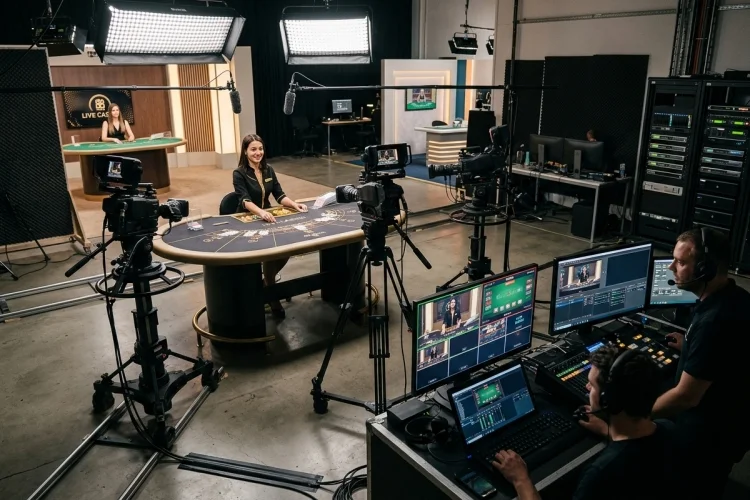

Live Casino or RNG Games? A Beginner’s Practical Comparison
Choosing between a live table and a standard online game is a little like choosing between a video call and a mobile app. Both happen through a screen, but the experience on the other side is very different.
A Live Casino connects you to a human dealer operating a physical table. A standard digital game is controlled by software, with results commonly generated by an RNG.
Neither choice is universally better. One may suit a relaxed evening, while the other works better for a short and private session.
This practical comparison looks at what beginners experience from the moment they open a game until the final result appears.
What Happens When You Open a Game?
Entering a live table usually launches a video stream. You see the dealer, table equipment, betting countdown, chip controls, recent results, and sometimes a chat window.
Once betting closes, the dealer starts the round. Cards may be drawn from a real shoe, or a physical roulette wheel may be spun in front of several cameras.
In a standard game, the interface is fully digital. The round begins when you press a button, and software displays the result through graphics or animation.
Human Dealer Versus RNG Software
The dealer manages physical actions but does not personally select whether a player wins. Live gaming systems use real-life table events instead of an automated RNG to determine the central result.
Automated games use a random number generator to select outcomes unpredictably. Testing laboratories examine RNG software for bias and predictability before it is approved in regulated jurisdictions.
This means the difference is mainly how the result is produced and presented – not whether players can control it.
Which Format Has Faster Rounds?
RNG games usually move much faster. A slot spin or digital roulette result may appear almost immediately, and the player decides when to begin the next round.
Live games must follow physical procedures. The dealer waits for bets, handles the equipment, announces the result, and prepares the next round.
The slower rhythm can give beginners more time to watch what is happening. However, decision-based games such as live blackjack still use timers, so players need to understand the controls before wagering.
Which Experience Feels More Social?
A live table normally offers more interaction. Dealers may greet users, explain betting periods, and respond to appropriate chat messages.
Some games also allow participants to see how many other people are watching or playing. The atmosphere can feel lively, especially during roulette spins and hosted game shows.
Standard games are quieter and more personal. There is no pressure to follow a presenter, wait for another participant, or join a conversation. That simplicity may be more comfortable for beginners who prefer to learn privately.
Rules, Strategy, and Game Information
Both formats can use the same basic table-game principles, but individual rules still vary. Two blackjack tables may have different payouts, deck counts, side bets, or dealer soft-17 instructions.
Standard games often include detailed help screens, paytables, and strategy information that can be opened without holding up a live round. Some also provide demonstration modes.
In regulated environments, play-for-free versions should accurately represent the rules and likelihood of winning in their corresponding real-money games.
Device and Connection Requirements
A standard digital game may run smoothly on a modest connection because it does not continuously stream live video.
Live tables need enough bandwidth for the dealer feed, audio, graphics, account information, and player controls. HTML5 technology allows many modern tables to operate through desktop and mobile browsers without separate software.
When a connection becomes unstable, the video may freeze even though the central game continues. Players should read the operator’s disconnection policy before participating. Regulated operators are expected to have fair procedures for interrupted gambling.
Betting Limits and Session Costs
Digital titles commonly support a broad range of wagers. Since every user can receive an independent software-generated round, a game does not need one dealer for each table.
Live operations require presenters, studio equipment, cameras, supervisors, and technical teams. Some tables consequently have higher minimum bets, although low-stake and unlimited-seat versions are widely available.
Do not choose a table simply because it looks impressive. Check whether its minimum wager fits the total entertainment budget for the session.
Transparency and Fairness
Watching physical cards or a wheel may create a stronger feeling of transparency. However, the complete system still includes software that records bets, identifies results, and processes payments.
Live dealer studios therefore need controls that make the games fair and independently auditable. Standard games require tested randomness, correct paytables, and reliable transaction records.
A licence from a recognised regulator and independent game testing provide more useful evidence than appearance alone.
Live Casino tables are suited to players who enjoy real dealers, natural game pacing, physical equipment, and a social setting. RNG games are generally better for quick sessions, private play, broad variety, and greater control over when each round begins.
Beginners should try free or low-cost options where legally available before deciding which format feels more comfortable. Compare the rules, minimum wager, connection demands, and interface – not only the visuals.
Whichever style you select, establish a strict spending limit and session duration first. Use reality checks and account controls when available, and remember that neither format can promise consistent wins or reliable profit.